
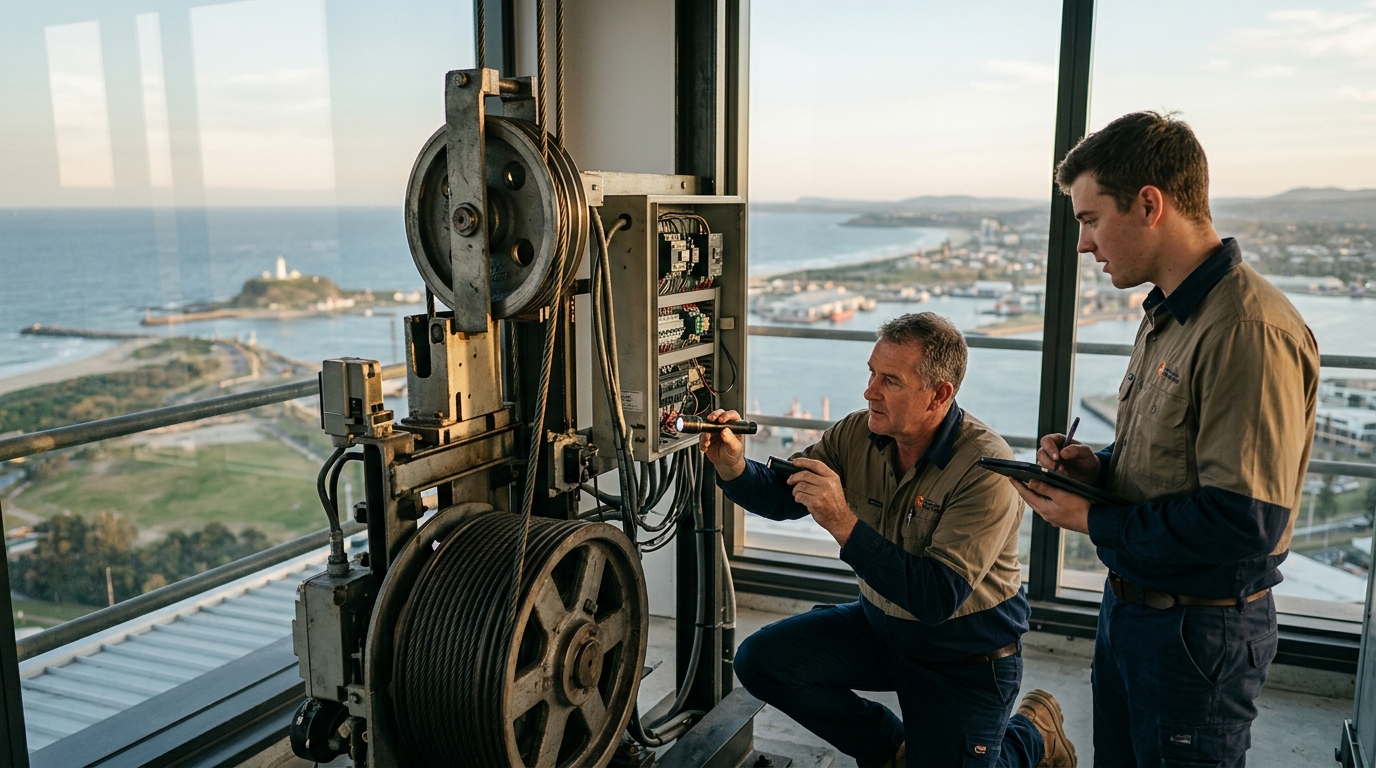
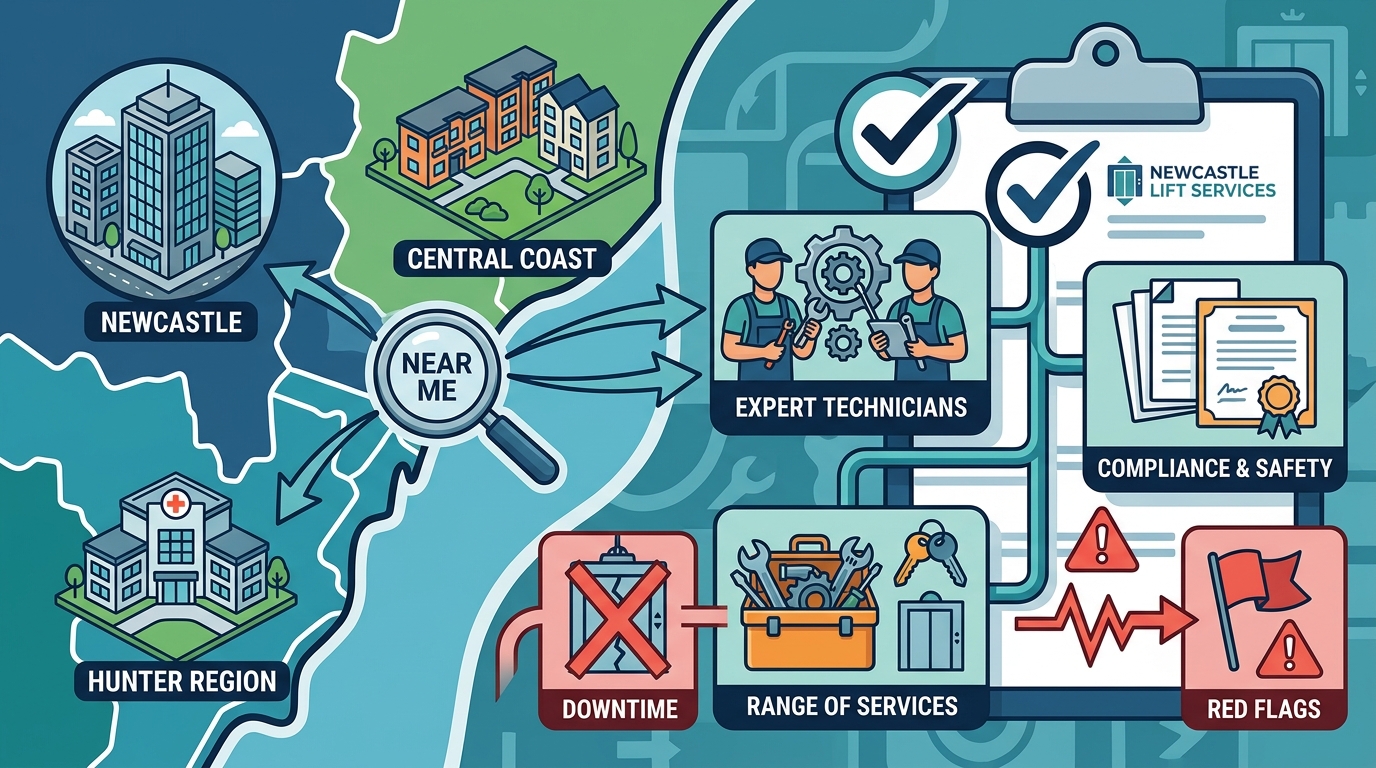
Choosing the right lift maintenance provider is one of the most important decisions a building owner or facility manager can make. A poorly maintained lift puts occupants at risk, exposes you to legal liability, and leads to costly emergency repairs. Whether you manage a commercial property in Newcastle, a residential complex on the Central Coast, or a healthcare facility in the Hunter Region, knowing what to look for in a lift service company will save you time, money, and stress. This guide walks you through the key criteria, compliance requirements, and red flags so you can make a confident, informed choice.
Why Regular Lift Maintenance Matters
Lift maintenance is the scheduled inspection, testing, and servicing of lift equipment to ensure safe and reliable operation. Skipping routine servicing does not just risk breakdowns; it can create serious safety hazards and legal exposure. In New South Wales, lifts must be registered with SafeWork NSW, and records of all inspection and maintenance work must be kept.
Proactive servicing catches problems like worn cables, hydraulic leaks, and faulty sensors before they escalate. Industry data consistently shows that preventive maintenance reduces emergency callouts by up to 50% compared to reactive-only approaches. For building owners across the Newcastle and Hunter Region, scheduling regular service visits is the single best way to protect occupants and extend equipment life.
Understanding Australian Lift Standards and Compliance
AS 1735 is the core Australian Standard governing the design, installation, and maintenance of lifts. It covers multiple parts addressing different lift types, safety features, inspection protocols, and ongoing maintenance obligations. Compliance is not optional; failure to meet these standards can result in fines, operational shutdowns, or insurance claims being denied.
NSW-Specific Requirements
In New South Wales, all lifts, escalators, and moving walkways are classified as plant items that must be registered. Every lift must also have an emergency communication system so trapped passengers can call for help. Building owners should ensure their lift maintenance provider documents every visit and keeps compliance records accessible for audits.
How Often Should Lifts Be Serviced?
For commercial lifts, quarterly servicing is standard practice, with a comprehensive annual inspection. Residential lifts typically require servicing every 6 to 12 months depending on usage and the manufacturer's guidelines. Your provider should tailor the schedule to your equipment type and traffic patterns.
Key Criteria for Evaluating a Lift Service Provider
Not all lift companies are created equal. Here are the factors that separate a dependable provider from a risky one.
Qualifications and Experience
A qualified lift technician is a tradesperson who holds the relevant licences and has completed specialised training in lift systems. Ask how long the company has been operating, how many lifts they currently maintain, and whether their technicians receive ongoing training. Newcastle Lift Services, for example, employs technicians with a decade of experience gained alongside some of the world's leading lift experts.
Compliance Track Record
Request evidence of AS 1735 compliance on their existing contracts. A reputable provider will happily share sample maintenance reports and explain their inspection checklists. Avoid any company that suggests skipping compliance processes to reduce costs.
Response Times and Emergency Support
Lift breakdowns rarely happen at convenient times. Confirm whether the provider offers 24/7 emergency callout services and what their average response time is for your area. A local company within 150 km of your site will almost always respond faster than a national operator dispatching from interstate.
The Advantage of Choosing a Local Provider
A local lift maintenance provider is a company based in or near your region that can deliver faster response times and more personalised service. National corporations may have broader brand recognition, but local operators typically offer several practical advantages.
Faster emergency response is the most obvious benefit. When a lift traps a passenger in a Lake Macquarie aged-care facility at 10 pm, you need a technician who can arrive within the hour, not one flying in from Sydney or Melbourne. Local providers also build deeper relationships with building managers, learning the quirks of each installation over time.
Newcastle Lift Services is Australian owned and operated, servicing the Central Coast, Hunter Region, and Lake Macquarie. As a local business, client relationships are central to their mission, and every job is carried out with a focus on long-term equipment efficiency and safety.
Questions to Ask Before Signing a Contract
Before committing to a maintenance agreement, put these questions to every provider on your shortlist:
- Are your technicians licensed and trained specifically for my lift brand and model?
- What does your standard maintenance visit include, and how is it documented?
- Do you carry manufacturer-approved spare parts, or will I face delays?
- What is your guaranteed response time for emergency callouts in my area?
- Can you provide references from buildings similar to mine?
- How do you handle compliance reporting and audit preparation?
Any hesitation or vagueness in answering these questions is a red flag. A trustworthy provider will be transparent about scope, pricing, and limitations.
Comparing Maintenance Plan Types
| Feature | Basic / Ad-Hoc | Preventive Plan | Comprehensive Plan |
|---|---|---|---|
| Scheduled inspections | None | Quarterly | Monthly or quarterly |
| Emergency callouts | Pay per visit | Discounted rate | Included |
| Parts and labour | Billed separately | Labour included; parts extra | All included |
| Compliance reporting | Not guaranteed | Standard reports | Full audit-ready documentation |
| Annual safety audit | No | Yes | Yes, with detailed recommendations |
| Best suited for | Low-use residential lifts | Commercial buildings | High-traffic or critical-use facilities |
Most commercial building owners find that a preventive or comprehensive plan delivers the best return on investment by reducing unplanned downtime and spreading costs predictably across the year.
Key Takeaways
- All lifts in NSW must be registered with SafeWork NSW, and maintenance records must be kept for every service visit.
- AS 1735 is the primary Australian Standard for lift safety, covering installation through to ongoing maintenance.
- Commercial lifts should be serviced at least quarterly; residential lifts every 6 to 12 months.
- Local providers like Newcastle Lift Services offer faster emergency response and stronger client relationships than remote national operators.
- Always verify a provider's licences, compliance track record, and emergency response guarantees before signing a contract.
- Comprehensive maintenance plans reduce long-term costs by preventing expensive emergency repairs and extending equipment lifespan.
- Never work with a company that suggests bypassing compliance to save money.
Frequently Asked Questions
How often should a commercial lift be serviced in Australia?
Commercial lifts should receive quarterly preventive maintenance visits along with a thorough annual inspection. High-traffic lifts in hospitals or shopping centres may need monthly attention. Your provider should tailor the frequency to your usage patterns and the requirements of AS 1735.
What is AS 1735 and why does it matter?
AS 1735 is the Australian Standard that sets safety and performance requirements for lifts, escalators, and moving walkways. It covers design, installation, inspection, and ongoing maintenance. Compliance is legally required, and non-compliance can lead to fines, shutdowns, or denied insurance claims.
Do residential lifts need professional maintenance?
Yes. Residential lifts in Australia should be serviced by a qualified professional every 6 to 12 months depending on usage. Regular maintenance keeps the lift compliant with AS 1735, prevents breakdowns, and extends its operational life.
What should I look for in a lift maintenance contract?
Key elements include the scope of each visit, parts and labour inclusions, emergency response time guarantees, compliance documentation, and clear escalation procedures. Ensure the contract specifies which components are covered and how often inspections occur.
Can I use any technician to service my lift?
No. Lift maintenance should only be performed by licensed, qualified technicians with specific training on your lift type. Using unqualified personnel can void warranties, breach regulations, and put building occupants at risk.
How do I know if my current lift maintenance provider is underperforming?
Warning signs include frequent breakdowns, incomplete service reports, slow emergency response, lack of compliance documentation, and technicians unfamiliar with your equipment. If you notice any of these, it may be time to request a free assessment from a specialist provider.
What areas does Newcastle Lift Services cover?
Newcastle Lift Services covers Newcastle, the Central Coast, the Hunter Region, Lake Macquarie, and everywhere within approximately 150 km of Newcastle, NSW 2300. They handle maintenance, repairs, replacements, modernisations, and new installations.
Is lift maintenance a legal requirement in NSW?
Yes. Under NSW work health and safety regulations, lifts are classified as plant items that must be registered and regularly maintained. Records of all inspections and maintenance must be kept and made available for regulatory audits.
Get Your Lift Assessed Today
If you are unsure whether your current lift maintenance meets Australian standards, or if you are looking for a more responsive local provider, now is the time to act. Contact Newcastle Lift Services for a no-obligation assessment of your lift equipment. Their experienced technicians serve the entire Newcastle, Central Coast, Hunter, and Lake Macquarie region with a commitment to safety, reliability, and long-term performance.