
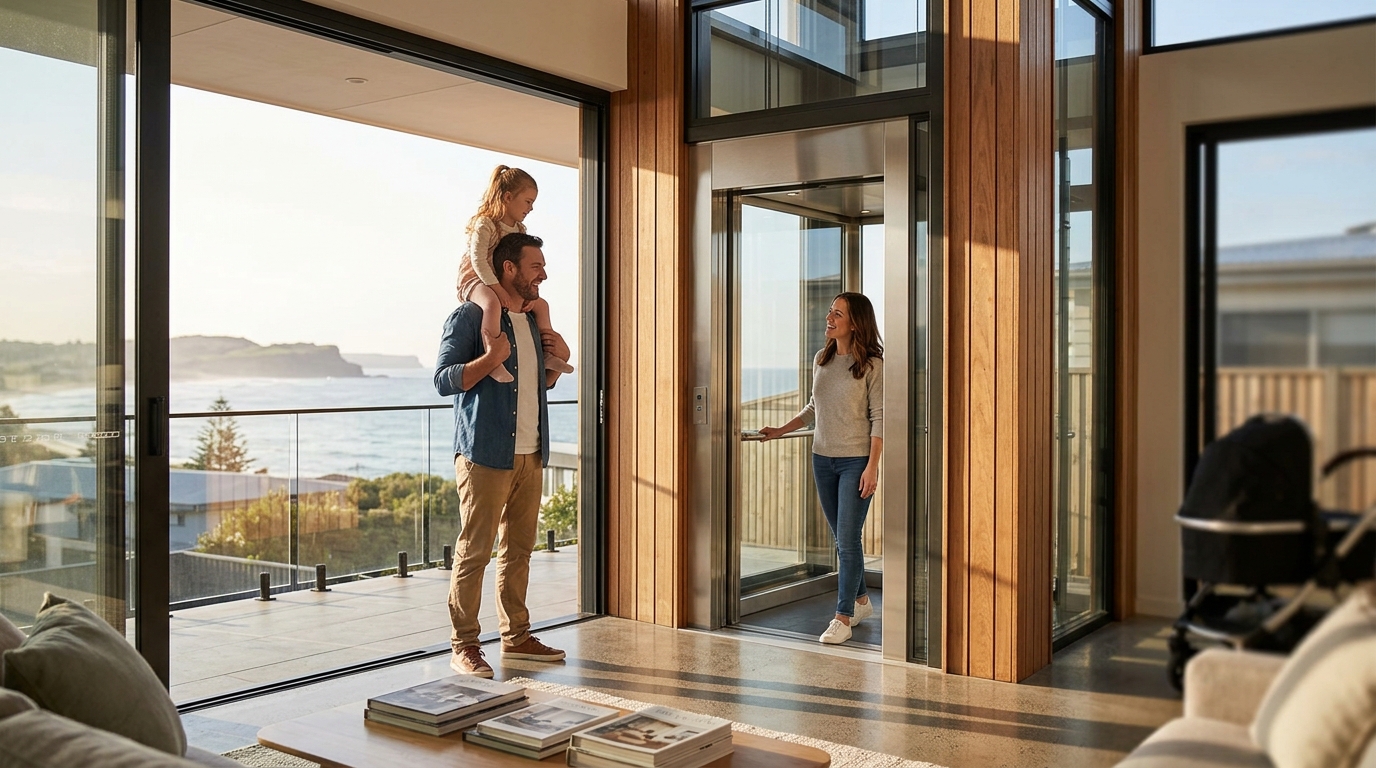
Whether you are planning a residential lift for a multi-storey home or a commercial elevator for a new development, understanding the true cost of lift installation in Australia is essential for smart budgeting. Prices vary widely depending on lift type, the number of floors served, site complexity, and compliance requirements. In this guide, we break down every cost factor so you can plan with confidence. Newcastle Lift Services has over a decade of experience helping property owners across the Hunter Region, Central Coast, and Lake Macquarie navigate the entire process, from initial consultation to final commissioning.
Average Lift Installation Costs in Australia
In 2026, the cost of a new lift installation in Australia typically ranges from $25,000 to $65,000 AUD for the lift unit and standard installation. This figure excludes major building works, shaft construction, and GST. Retrofitting a lift into an existing property generally costs between $60,000 and $100,000 AUD all-in, because additional structural, plumbing, and electrical work is almost always needed.
For commercial buildings, a basic two-level DDA-compliant lift starts from around $50,000 plus GST, with prices climbing based on cabin size, travel distance, and finishing materials. These ranges are consistent across major Australian cities, with small regional variations driven by labour availability rather than hardware pricing.
Key Factors That Influence Installation Price
No two lift projects are the same. Understanding the variables that drive price will help you budget accurately and avoid surprises.
Number of Floors and Stops
Each additional stop adds roughly $5,000 to $10,000 to the total project cost. More stops mean taller shafts, additional landing doors, extended wiring, and more sophisticated control systems. A standard two-stop configuration is the most affordable starting point.
New Build vs Retrofit
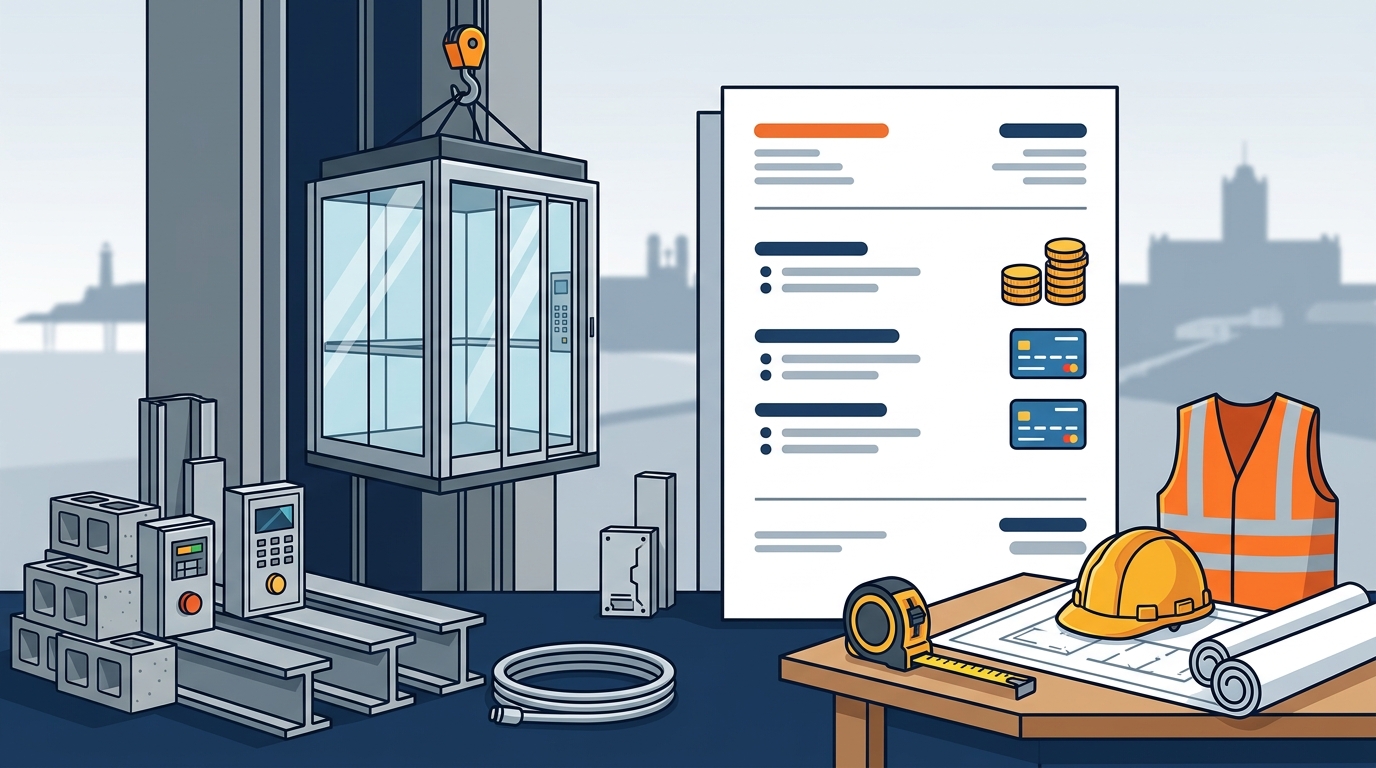
Incorporating a lift during new construction is significantly cheaper and less disruptive than retrofitting one into an existing building. Retrofit projects can add $3,000 to $15,000 in civil works alone, covering shaft construction, floor reinforcement, and electrical upgrades. If you are planning a build in the Newcastle or Hunter Region, factoring the lift in early saves both time and money.
Customisation and Finishes
Standard powder-coated cabins are the most economical option. Upgrading to tempered glass walls, hardwood flooring, or custom LED lighting can increase the lift unit price by 30% to 50%. Premium features like remote monitoring and touch-screen controls also add to the upfront investment.
Residential vs Commercial Lift Costs
A residential lift is a passenger elevator designed for private home use, typically serving two to three floors with a capacity of one to four people. A commercial lift is an elevator installed in public or business premises that must meet Disability Discrimination Act (DDA) accessibility requirements.
| Category | Typical Price Range (AUD, excl. GST) | Key Requirement |
|---|---|---|
| Residential (2-stop, standard) | $25,000 – $65,000 | AS 1735.18 compliance |
| Residential retrofit (total project) | $60,000 – $100,000+ | Structural modifications required |
| Commercial (2-level, DDA compliant) | $50,000 – $90,000+ | AS 1735.12 & DDA compliance |
| Annual maintenance | $500 – $2,500 | Regular inspections by licensed technician |
Commercial lifts carry a higher base price because DDA compliance mandates a minimum internal cabin size of 1,100 mm wide by 1,400 mm deep and a minimum clear door opening of 900 mm. These requirements increase both material and engineering costs. Our experienced technicians can advise on the most cost-effective solution for your building type.
Cost by Lift Type
The drive system you choose has a major impact on both the upfront price and long-term operating costs. A drive system is the mechanical technology that moves the lift car between floors.
| Lift Type | Price Range (AUD) | Best For |
|---|---|---|
| Battery/Screw-Driven | $25,000 – $40,000 | Compact homes, minimal civil works |
| Hydraulic | $35,000 – $55,000 | Heavier loads, multi-storey buildings |
| Traction (Electric) | $40,000 – $65,000 | Smooth ride, energy efficiency, taller buildings |
| Pneumatic (Vacuum) | $45,000 – $75,000 | Stylish retrofits, no shaft required |
Screw-driven lifts are gaining popularity in 2025-2026 because they are compact, require no machine room, and offer an excellent balance of price and performance. Hydraulic lifts remain a strong choice where higher load capacity is needed, though they require a pit and dedicated machine room. If you need help selecting the right type for your property, contact Newcastle Lift Services for a no-obligation consultation.
Australian Standards and Compliance Costs
Every lift installed in Australia must comply with the AS 1735 series, which covers the design, installation, and maintenance of lifts, escalators, and moving walks. AS 1735 is a comprehensive set of technical and safety requirements developed by Standards Australia. Specifically, AS 1735.12 addresses accessibility for people with disabilities, while AS 1735.18 covers passenger lifts for private residences.
Compliance costs include council permits, electrical certification, and safety feature integration such as emergency brakes, battery backup systems, and infrared door sensors. Budget between $1,500 and $5,000 for permits and electrical work, depending on your state. In New South Wales, council approval is typically required before any lift installation can proceed. Ignoring these requirements can result in failed inspections, voided insurance, and safety hazards.
Working with a qualified local lift company ensures your installation meets every regulatory requirement from day one.
Ongoing Maintenance and Running Costs
The purchase price is only part of the equation. Annual maintenance contracts for residential lifts generally cost between $500 and $1,500, while commercial lift servicing can range from $1,000 to $2,500 per year. Regular lift maintenance extends the lifespan of your equipment, minimises costly breakdowns, and keeps your lift compliant with safety standards.
Energy costs are modest for modern electric and screw-driven systems, which often consume no more power than a household kettle. Hydraulic systems tend to draw more energy due to motor and fluid pump requirements. Choosing an energy-efficient model upfront can deliver meaningful savings over the 20-to-25 year life of a typical lift.
Key Takeaways
- Standard residential lift installation in Australia costs between $25,000 and $65,000 AUD excluding major building works.
- Retrofitting adds $3,000 to $15,000 in civil and structural work on top of the lift unit price.
- Commercial DDA-compliant lifts start from approximately $50,000 plus GST for a basic two-level system.
- Each additional stop increases the total project cost by $5,000 to $10,000.
- All lifts must comply with the AS 1735 series; budget $1,500 to $5,000 for permits and compliance.
- Annual maintenance ranges from $500 to $2,500 depending on the lift type and service package.
- Planning the lift during new construction rather than retrofitting later saves significant time and money.
Frequently Asked Questions
How much does a basic residential lift cost in Australia?
A standard two-stop residential lift typically costs between $25,000 and $65,000 AUD for the unit and installation. This excludes shaft construction and major building modifications, which can add $3,000 to $15,000 for retrofits.
What is the cost of a commercial lift installation?
A basic two-level DDA-compliant commercial lift starts from around $50,000 plus GST. Costs increase with cabin size, travel distance, number of stops, and finishing materials.
What factors affect lift installation price the most?
The biggest cost drivers are the lift type and drive system, the number of floors served, whether the project is a new build or retrofit, and the level of customisation chosen for finishes and smart features.
Do I need council approval to install a lift in NSW?
Yes, most councils in New South Wales require development approval before a lift installation can proceed. Your installer should help you navigate the permit process to avoid delays.
What is AS 1735 and why does it matter?
AS 1735 is the Australian Standard that sets safety, design, and performance requirements for all lifts, escalators, and moving walks. Compliance is legally required for operation and insurance purposes across every state and territory.
How long does a lift installation take?
Installation typically takes two to eight weeks depending on the lift type, site readiness, and whether the project involves new construction or a retrofit. Compact screw-driven models tend to be the quickest to install.
What are the ongoing costs of owning a lift?
Annual maintenance contracts range from $500 to $2,500. Energy costs are minimal for modern electric systems. Budgeting for regular servicing helps prevent expensive emergency repairs and keeps the lift compliant with safety standards.
Does a lift add value to my property?
Yes. A quality lift can increase a property's resale value by 10% to 25% or more, particularly in areas with ageing populations or where multi-generational living is common.
Get a Tailored Quote from Newcastle Lift Services
Every lift project is unique, and generic pricing can only take you so far. Newcastle Lift Services provides obligation-free, tailored quotes for residential and commercial lift installations across the Hunter Region, Central Coast, and Lake Macquarie. Our technicians bring over a decade of hands-on experience with the world's leading lift systems. Request your free quote today and take the first step toward a safer, more accessible building.