
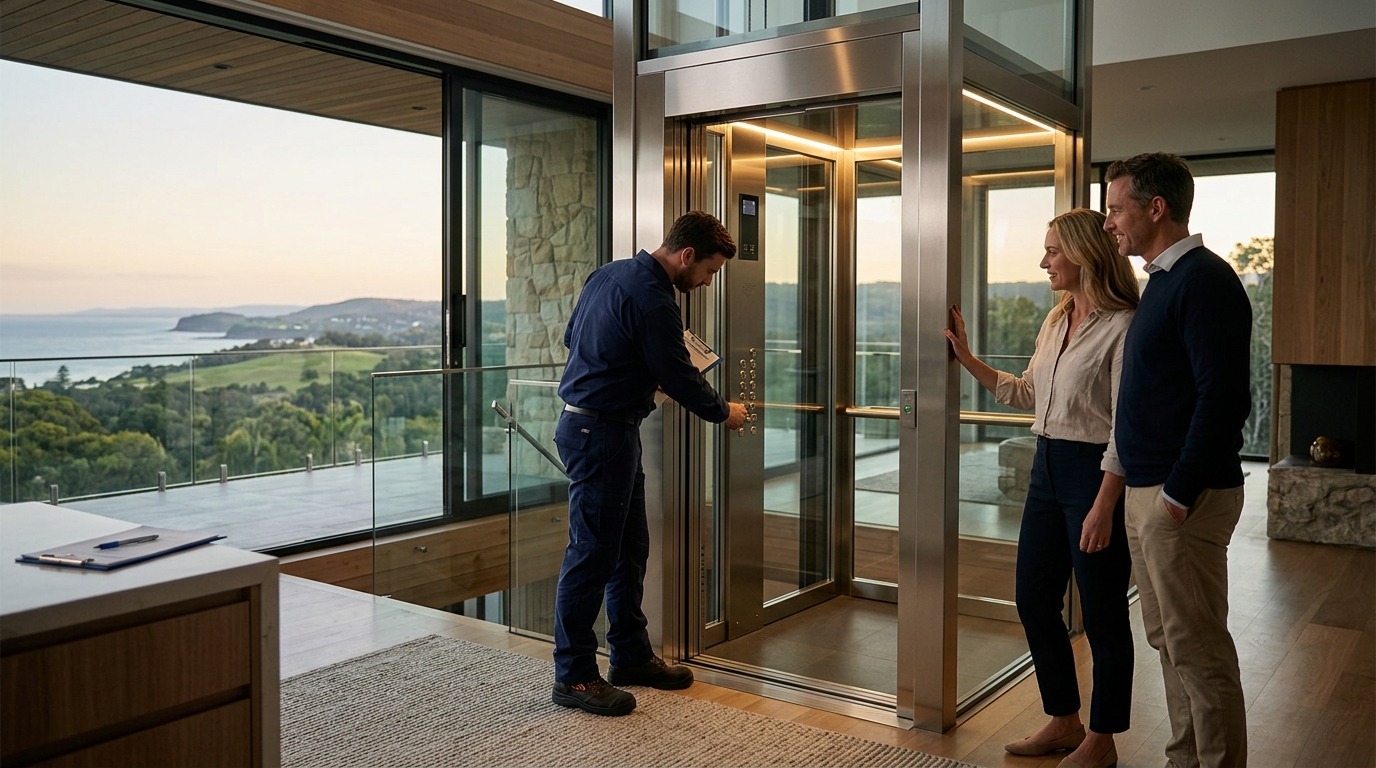
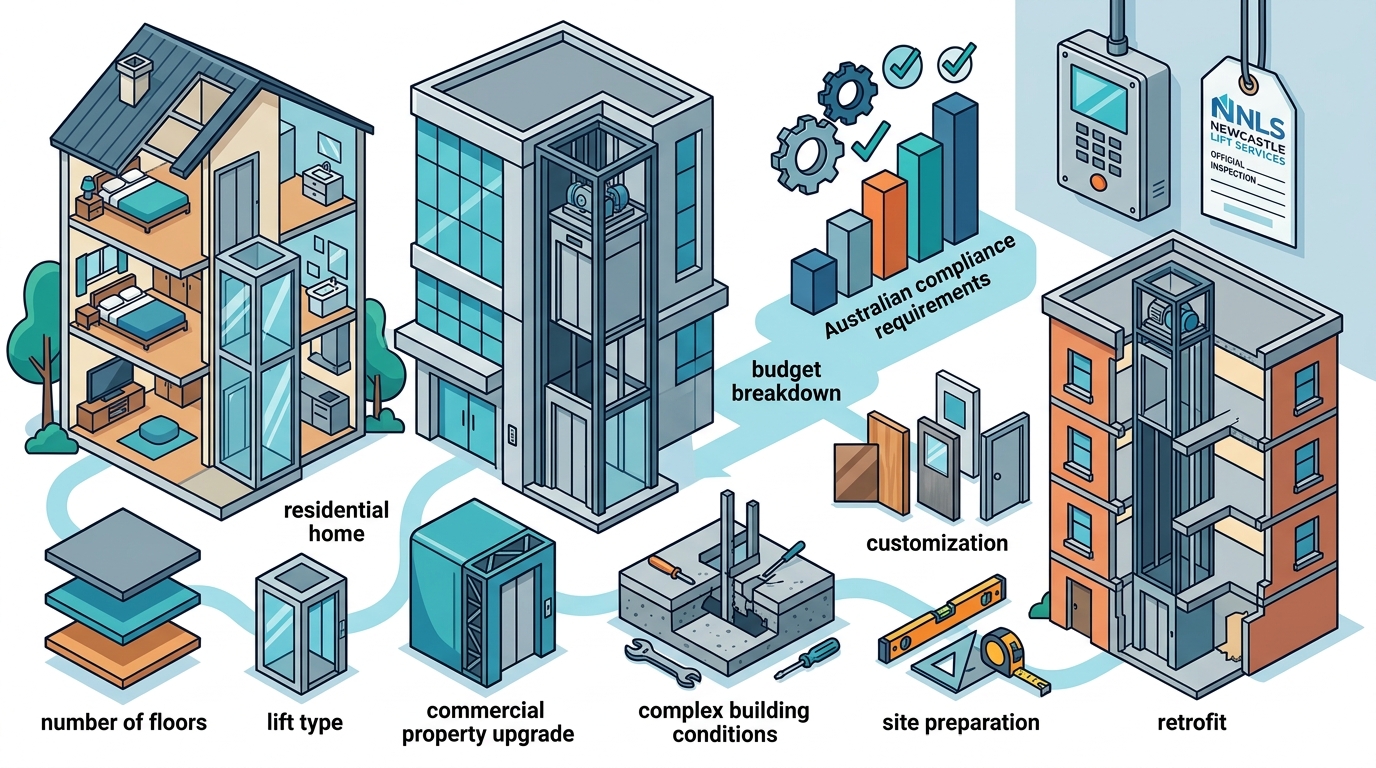
Whether you are building a new home in the Hunter Region, upgrading a commercial property on the Central Coast, or retrofitting an existing building in Lake Macquarie, understanding the true cost of a new lift installation is essential. Prices vary significantly depending on lift type, number of floors, building conditions, and Australian compliance requirements. In this guide, we break down residential and commercial lift installation costs for 2026, explain what drives the price up or down, and help you plan a realistic budget before requesting quotes from a professional lift services provider.
Residential Lift Installation Costs in 2026
A residential lift is a permanently installed elevator designed to transport people between floors in a private home. In 2026, home lift prices in Australia typically range from $35,000 to $65,000 for the lift unit and basic installation, excluding major building works.
If your project involves retrofitting a lift into an existing home, expect to pay more. According to industry data, the total cost for a retrofit project generally lands between $60,000 and $100,000 AUD plus GST once you include shaft construction, electrical upgrades, and structural modifications. Around 60% to 70% of all residential lift enquiries across Australia are for retrofits rather than new builds.
For budget-conscious homeowners, compact screw-driven models start near $31,000, while premium multi-stop configurations with luxury finishes can exceed $110,000. If you are considering a lift for your Newcastle or Hunter Region home, our team can walk you through every option during a free consultation.
Commercial Lift Installation Costs
A commercial lift is a higher-capacity elevator designed for public or business use, typically requiring DDA (Disability Discrimination Act) compliance. In Australia, a basic two-level DDA-compliant commercial lift starts from around $50,000 plus GST. For most office and retail spaces, installation costs range between $50,000 and $100,000 per landing.
Larger or more complex commercial projects can push well beyond this range. High-rise traction systems, freight lifts, and hospital-grade elevators may cost $125,000 to over $550,000 per unit depending on speed, capacity, and customisation requirements.
Key Factors That Influence Lift Installation Price
Number of Floors and Stops
Each additional stop typically adds $5,000 to $10,000 to the total cost because of extra landing doors, wiring, and safety features. A two-stop system sits at the base price, while three or four levels increase both complexity and expense.
New Build vs. Retrofit
Incorporating a lift during a new build is generally cheaper and less disruptive. Retrofitting into an existing structure often requires shaft construction, floor strengthening, and electrical upgrades, potentially adding $3,000 to $15,000 on top of the lift price. Our lift installation and modernisation services cover both scenarios across the Newcastle and Hunter region.
Customisation and Finishes
High-end cabin finishes such as tempered glass walls, hardwood flooring, and custom LED lighting can increase the price by 30% to 50%. Standard powder-coated steel cabins keep costs lower without sacrificing safety.
Lift Types Compared
| Lift Type | Indicative Price (AUD, 2-stop) | Best For | Machine Room Required? |
|---|---|---|---|
| Compact / Screw-Driven | $31,000 – $40,000 | Small homes, tight spaces | No |
| Hydraulic | $45,000 – $55,000 | Heavy loads, low-rise buildings | Yes |
| All-Electric Traction | $42,000 – $55,000 | Energy efficiency, quiet operation | No |
| Pneumatic (Vacuum) | $69,000+ | Retrofits, design statement | No |
| Commercial DDA-Compliant | $50,000+ per landing | Offices, retail, public buildings | Varies |
A hydraulic lift is a system that uses pressurised fluid and a piston to move the car vertically, commonly selected for low-rise commercial and residential applications. A traction lift is an elevator driven by steel ropes or belts over a sheave, offering smoother rides and better energy efficiency for taller buildings. A pneumatic lift is a shaft-free elevator that uses air pressure changes to raise and lower the car, ideal for homes with limited structural space.
Australian Standards and Compliance (AS 1735)
All lift installations in Australia must comply with the AS 1735 series, which covers the design and installation of lifts, escalators, and moving walks. AS 1735.12 specifically addresses accessibility, mandating minimum cabin dimensions of 1,100 mm x 1,400 mm and a clear door opening of at least 900 mm for wheelchair access.
In 2026, compliance requirements are stricter than ever, with increased focus on emergency braking systems and fire safety integration. Commercial lifts must also meet DDA requirements, ensuring that all DDA-compliant cabins start at a minimum internal size of 1,100 mm wide by 1,400 mm deep. Non-compliance can result in failed inspections, voided insurance, and legal penalties.
Working with an experienced local lift team ensures your installation meets every applicable standard from day one.
Ongoing Maintenance and Hidden Costs
The purchase price is only part of the equation. Annual maintenance for residential lifts typically costs between $500 and $1,500, while commercial service contracts run from $1,000 to $2,500 per year. Budget an additional $1,500 to $5,000 for permits, site preparation, and electrical work.
Experts recommend allowing a 20% to 30% contingency margin in your budget for unforeseen expenses such as building code changes or unexpected structural issues. Regular lift maintenance and servicing protects your investment and extends the operational life of your equipment significantly.
Key Takeaways
- Residential lift installation in Australia ranges from $35,000 to $65,000 for the unit and basic install; retrofits can push total costs to $60,000 to $100,000.
- Commercial DDA-compliant lifts start from around $50,000 plus GST per landing.
- Each additional floor or stop adds roughly $5,000 to $10,000 to the project.
- All installations must comply with AS 1735 standards and relevant DDA requirements.
- Annual maintenance costs range from $500 to $2,500 depending on lift type and usage.
- New builds are generally cheaper for lift installation than retrofitting existing structures.
- Always request all-inclusive quotes and budget a 20% to 30% contingency margin.
Frequently Asked Questions
How much does a basic home lift cost in Australia in 2026?
Home lift prices in Australia typically range from $35,000 to $65,000 for the lift unit and standard installation. Basic compact models can start near $31,000, while premium or multi-stop configurations exceed $100,000.
What does a commercial lift installation cost?
A basic two-level DDA-compliant commercial lift starts from around $50,000 plus GST. Most office and retail installations cost between $50,000 and $100,000 per landing, with large-scale projects potentially exceeding $550,000.
Is it cheaper to install a lift in a new build or retrofit?
Installing during a new build is almost always more cost-effective. Retrofitting adds $3,000 to $15,000 or more for shaft construction, structural reinforcement, and electrical upgrades.
What Australian standards must a lift comply with?
All lifts in Australia must comply with the AS 1735 series, which covers safety, design, and installation. Commercial lifts must also meet DDA accessibility requirements, including minimum cabin dimensions and door widths.
How much does lift maintenance cost per year?
Annual maintenance for home lifts typically runs $500 to $1,500. Commercial lift service contracts range from $1,000 to $2,500 per year depending on usage and lift type.
Can I get funding for a home lift installation?
If you are installing a lift for accessibility or medical reasons, you may be eligible for support through the NDIS under home modifications. Some state governments also offer aged care or accessibility rebates. Contact your local council or occupational therapist for guidance.
How long does a lift installation take?
A standard residential electric lift installation can typically be completed within a month, depending on building readiness and site conditions. Commercial installations vary more widely based on building size and complexity.
Does a lift add value to my property?
Yes. Australian property data suggests that elevators can increase resale prices by 10% to 25% or more, particularly in areas with ageing populations or multigenerational households.
Get a Free Lift Installation Quote
Newcastle Lift Services is your locally owned and operated lift expert serving Newcastle, the Central Coast, Hunter Region, and Lake Macquarie. Whether you need a new residential lift, a commercial installation, or a full lift modernisation, our experienced technicians deliver safe, compliant results backed by a decade of hands-on expertise.
Contact Newcastle Lift Services today to request your free, no-obligation quote and take the first step toward a safer, more accessible building.