
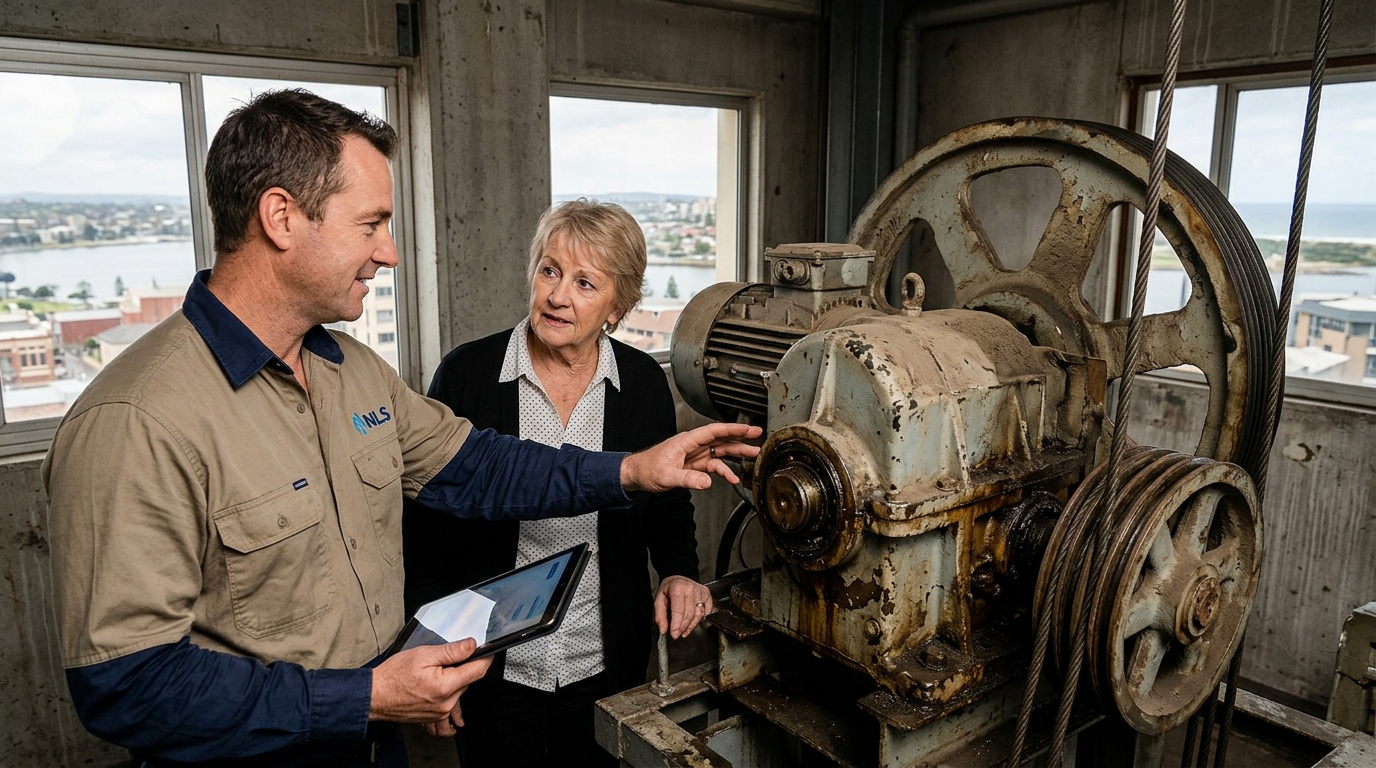
Ageing lift systems are a reality for many commercial and residential buildings across the Hunter Region, Central Coast, and Lake Macquarie. As mechanical components wear down over time, building owners face slow ride times, unexpected breakdowns, and growing safety concerns. Understanding the most common issues with old lifts is the first step toward keeping your system reliable, compliant, and cost-effective. In this guide, the team at Newcastle Lift Services breaks down the problems we see most often and the proven fixes that restore performance.
Mechanical Wear and Component Degradation
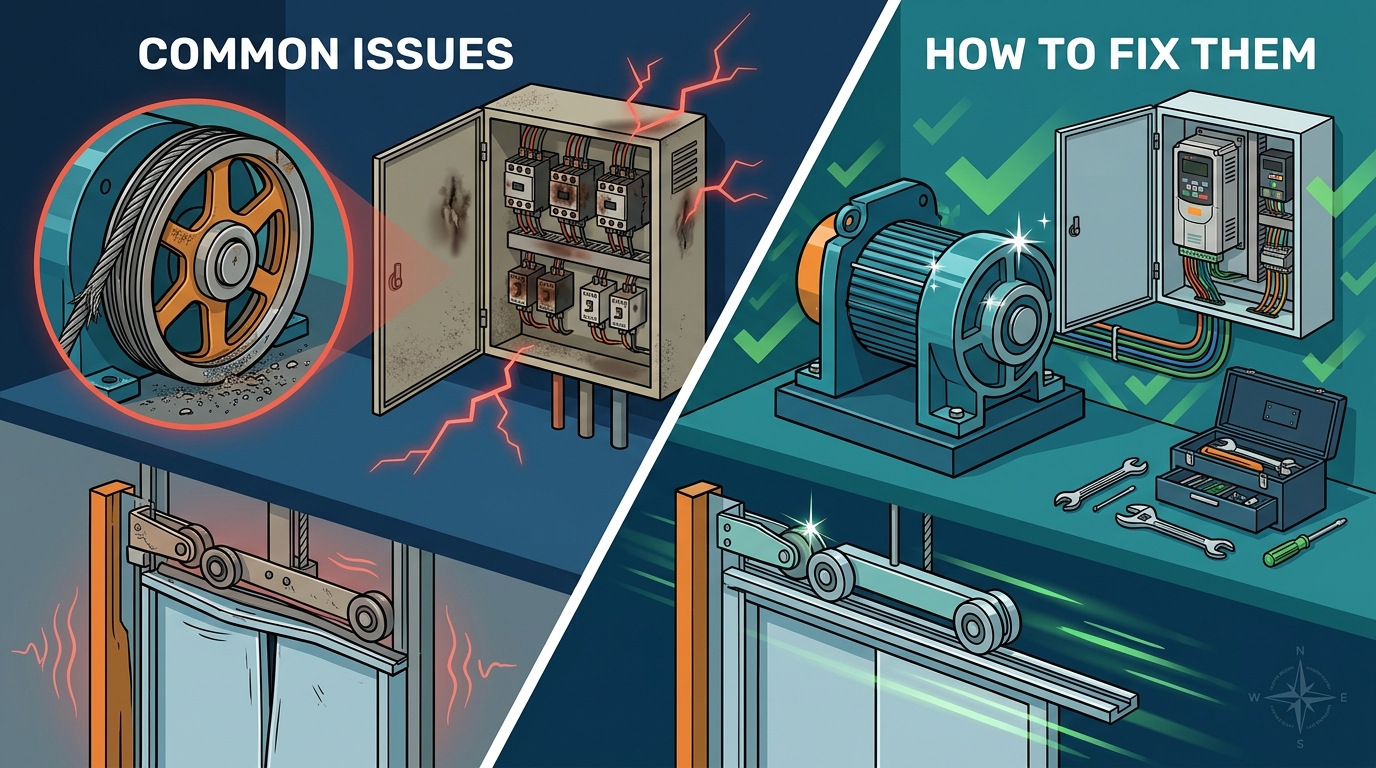
Mechanical wear is the gradual deterioration of moving parts such as cables, pulleys, bearings, and motors due to friction and repeated use. Over time, traction cables, guide rails, and bearings lose lubrication and alignment, causing the car to travel unevenly or stop short of the floor.
Worn sheaves place excess wear on ropes, which in turn accelerates further sheave damage. Once this cycle begins, premature hoist rope failure becomes a real risk. Vibration or rumbling noises are early warning signs that friction points need attention.
How to Fix It
Schedule regular inspections with experienced lift maintenance technicians to identify worn-out components before they fail. Replacing or regrooving sheaves and lubricating moving parts on a set schedule prevents cascading damage. For severely degraded systems, a full modernisation may be the most cost-effective path forward.
Door Malfunctions
Lift door malfunction is a failure in the door operator system that prevents doors from opening, closing, or aligning correctly. Door problems are among the most common reasons for elevator downtime and repairs, especially in busy buildings where doors are in constant operation.
Blocked sensors, misaligned tracks, worn pulleys, and damaged guide rails all contribute to unreliable door behaviour. When a door fails to close properly, the lift's safety features may prevent movement entirely.
How to Fix It
Regularly clean and inspect door tracks for dirt or obstructions. Check sensors and adjust alignment to avoid false errors. A damaged door pulley should be replaced promptly since it can prevent your lift door from closing correctly. Our lift repair specialists carry common replacement parts to minimise downtime.
Electrical and Power Issues
Power outages and voltage fluctuations are leading causes of unexpected lift shutdowns. Lifts demand significant power from building utility systems, so updates to voltage supply can affect motor operations or even damage the system. Blown fuses, damaged wiring, and storm events can all trigger failures.
How to Fix It
Conduct power quality surveys to uncover common faults like under or over voltage. Safe Work Australia recommends regular electrical inspections as part of workplace safety obligations. Replace ageing electrical components during planned modernisation rather than waiting for failure. Infrared thermography can identify overheating fuses and wiring before they cause costly system failures.
Slow or Jerky Performance
Slow or jerky lift movement is a noticeable delay or uneven ride caused by improper lubrication, worn-out components, misaligned pulleys, or problems with the motor or drive system. Outdated control systems and inadequate maintenance are the most frequent underlying causes.
How to Fix It
Regularly lubricate all moving parts as per the manufacturer's guidelines. If jerky movement persists, a thorough inspection may reveal the need to realign pulleys, replace worn components, or repair the drive system. Upgrading the lift's control system can significantly improve efficiency and speed, which is a service our experienced team provides throughout Newcastle and surrounding areas.
Outdated Safety and Compliance Features
Older lifts may lack modern safety features such as emergency braking systems, updated door sensors, fire service compliance, and emergency communication devices. In Australia, lifts must comply with NSW Work Health and Safety Regulation requirements, and non-compliant systems pose serious liability risks for building owners.
How to Fix It
A comprehensive lift modernisation brings your system up to current Australian standards. This can include upgrading fire service controls, installing modern door sensors, and adding emergency communication systems. Safety testing and compliance checks should be part of every scheduled maintenance visit.
Energy Inefficiency in Older Systems
Older lift systems tend to consume more energy due to inefficient motors, outdated lighting, and power-hungry control systems. Routine maintenance combined with targeted upgrades can decrease energy consumption by up to 15%, according to industry data.
| Common Old Lift Issue | Primary Cause | Recommended Fix |
|---|---|---|
| Mechanical wear | Worn cables, bearings, sheaves | Scheduled inspections and part replacement |
| Door malfunctions | Misaligned sensors, worn pulleys | Cleaning, calibration, component replacement |
| Electrical failures | Voltage fluctuations, old wiring | Power quality surveys, wiring upgrades |
| Slow or jerky ride | Poor lubrication, outdated controls | Lubrication schedule, control system upgrade |
| Safety non-compliance | Missing modern safety features | Full or partial modernisation |
| High energy use | Inefficient motors and lighting | LED upgrades, energy-efficient motors |
How to Fix It
Modernisation with energy-efficient motors, LED cab lighting, and updated controllers delivers measurable savings. Even partial upgrades can make a significant difference. Talk to Newcastle Lift Services about an energy assessment for your building's lift.
Key Takeaways
- Door malfunctions are the single most common cause of lift downtime in older buildings.
- Mechanical wear on sheaves, cables, and bearings accelerates when maintenance is skipped.
- Power quality surveys and infrared thermography catch electrical faults before they cause shutdowns.
- Upgrading control systems improves both ride quality and energy efficiency.
- Australian building owners must ensure lifts comply with current WHS regulations.
- Preventive maintenance reduces emergency callouts and extends equipment lifespan significantly.
- A local, experienced lift service provider ensures faster response times across the Hunter Region, Central Coast, and Lake Macquarie.
Frequently Asked Questions
How often should an old lift be serviced?
Most older lifts benefit from monthly preventive maintenance visits. High-traffic buildings may require more frequent inspections. A tailored maintenance schedule based on your building's usage is the best approach.
What is lift modernisation?
Lift modernisation is the process of upgrading an existing lift system's components, such as control systems, door operators, motors, and safety features, to meet current performance and compliance standards without replacing the entire unit.
How do I know if my lift needs modernisation or just repairs?
If your lift experiences frequent breakdowns, uses obsolete parts, or fails to meet current safety codes, modernisation is likely the better investment. Occasional isolated faults can usually be addressed with targeted repairs.
Are old lifts dangerous?
An old lift that receives regular professional maintenance can remain safe. However, lifts lacking modern safety features like emergency braking and updated door sensors do pose increased risk and should be assessed by a qualified technician.
What causes a lift to get stuck between floors?
A stuck lift can result from a power outage, control system error, or mechanical failure. Checking the power supply and control panel for error codes is the first step. Regular maintenance significantly reduces the likelihood of entrapment events.
How much does lift maintenance cost in Newcastle?
Costs vary depending on the lift type, age, and frequency of service. Contact Newcastle Lift Services for a tailored quote based on your specific equipment and building requirements.
Can old lift parts still be sourced?
Many older lift systems use components that manufacturers no longer produce. A specialist lift service provider can often source compatible replacements or recommend modernisation where parts are truly obsolete.
Does preventive maintenance really save money?
Yes. Preventive maintenance catches early faults, reduces emergency callouts, and keeps equipment within inspection limits. Industry data suggests it can also decrease energy consumption by up to 15%.
Keep Your Lift Running Safely
If your building's lift is showing signs of age, do not wait for a breakdown. Contact Newcastle Lift Services today for a professional inspection and maintenance plan tailored to your needs. Our locally based technicians serve Newcastle, the Hunter Region, Central Coast, and Lake Macquarie with responsive, expert lift care.